

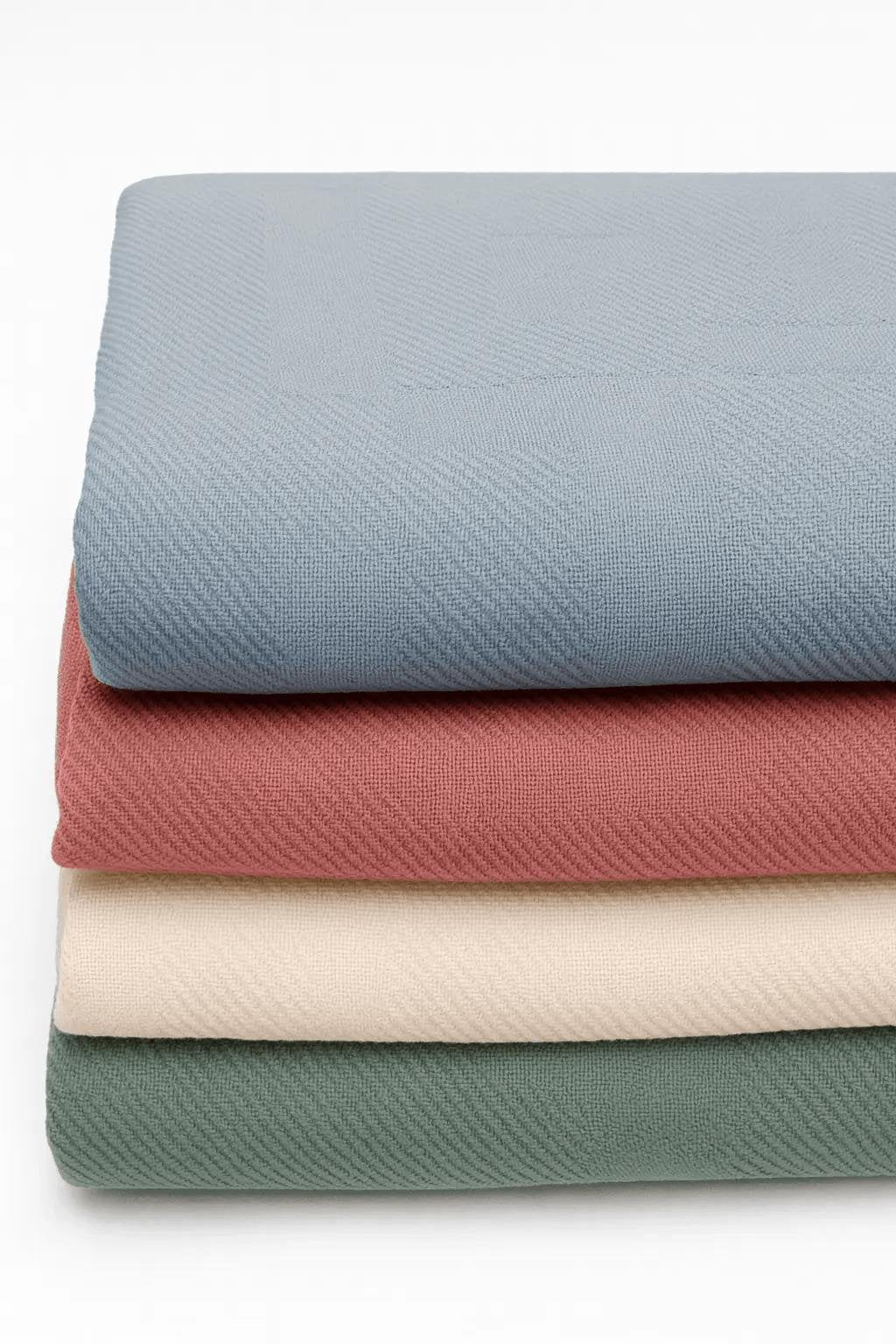
Short answer: Behavioral health and rehab facilities need bedding that survives heavy laundry, stays simple to inventory and does not introduce unnecessary loose parts. Before you buy, ask suppliers about:
- Blanket construction (snag-free and tear-resistant options);
- Wipeable or easily protected pillows;
- Kit contents with no loose decorative parts;
- Laundry chemistry and real lead times;
- Documentation your procurement and facilities teams need on file.
This guide is a buying checklist, not a product safety certification. Facilities set their own standards and protocols. We describe what to ask—not what any item is certified to do.
Why behavioral health linen buying is different
Hotel linens are built for guest reviews. Correctional linens are built for audit trails and extreme wear. Behavioral health sits in between: residents need dignity and comfort, while staff need items that are easy to inspect, hard to misuse and quick to replace after a laundry cycle.
Common pressure points buyers report:
- Blankets that snag, fray or lose pieces;
- Pillows that absorb fluids and are hard to clean;
- Decorative bedding with ties, buttons or removable covers that create inventory and safety questions;
- Catalogs that make bold performance claims without paperwork to match.
The right response is a clear RFQ, not a marketing brochure. Write the questions below into your quote request and compare answers side by side.
Question 1: What blanket constructions do you offer for high-wear units?
Ask for options described in ordinary commercial terms—snag-free weaves, tear-resistant constructions, weight class and how the blanket finishes after repeated commercial washes. Request a sample you can wash on your own formula before you commit a whole unit.
Questions that belong in the RFQ:
- How does the blanket behave after hot wash and high-heat dry?
- Does the edge construction fray or open after repeated cycles?
- Can you color-code or label for unit-level inventory?
- What is the replacement path when a blanket is rejected?
Browse our correctional blankets and related correctional shelves for institutional constructions. Match the item to your facility protocol; do not assume a catalog label equals a clinical or safety rating.
Factory Pro-Tip: Ask for a washed sample, not only a new sample. Behavioral health laundry is where most “looks fine on day one” products fail.
Question 2: How are pillows cleaned, protected and replaced?
Pillows are hygiene items first. Ask whether the supplier offers:
- Wipeable pillows with a cleanable surface;
- Standard sleeping pillows plus waterproof protectors and washable cases;
- A documented replacement interval so flat or stained pillows do not linger on the floor.
Clarify who owns the cleaning step: environmental services wipe-down, laundry wash of a removable cover, or full pillow replacement. Put that answer in the purchase description so nursing and EVS are not improvising.
See correctional sleeping pillows and hospital pillows for institutional options. Pair every pillow with a case—and a protector when your protocol calls for one.

Question 3: What is in the kit—and what is intentionally left out?
Behavioral health buyers increasingly order simple kits: sheets, pillowcase, pillow, blanket, and sometimes a towel set. The buying question is as much about what is not included as what is.
Ask the supplier to confirm the kit has no loose decorative parts—no removable ties, dangling labels that tear off easily, or multi-piece covers that separate into loose components during use. If your facility has a written standard for kit contents, paste it into the RFQ and require a line-by-line match.
Also ask:
- Is each kit individually bagged and labeled?
- Can kit contents be customized by unit (admission vs. longer stay)?
- How are shortages in one component (for example, pillowcases) restocked without buying a whole new kit?
Question 4: What do buyers commonly ask about specialized constructions?
Procurement teams often bring a list of specialized terms from clinical or facilities stakeholders. Treat those terms as questions to ask, not as claims a vendor gets to print.
For example, buyers sometimes ask suppliers whether an item is marketed as “ligature-resistant.” That is a question for the supplier’s documentation and for your own facilities and risk teams to evaluate against your standards. Paradise Pillow / The Linen Factory does not claim ligature resistance, suicide resistance, flame resistance or other safety certifications in this guide or in our marketing copy. If your RFQ requires specific third-party test reports, say so explicitly and review the reports with your compliance owners before award.
The same discipline applies to fire-performance language. Do not accept a verbal “it’s FR” on a sales call. If your facility requires particular test methods, name them in the RFQ and keep the certificates on file.

Question 5: How will these items survive your laundry?
Institutional laundry wears bedding out faster than almost any other setting. Ask:
- Recommended wash temperature and chemistry notes;
- Expected life under your turnover rate (get a range, not a guarantee);
- How rejects should be handled (credit, replacement, inspection photos).
Our posts on bleach alternatives for commercial linens and hotel towel wash temperature explain why chemistry and heat matter to linen life—even when the product is institutional rather than hospitality.
Lead times: small orders typically ship 3–5 days after receipt of order (ARO); medium orders 7–14 days ARO. Larger custom programs take longer. Ask for a dated commitment in the quote.
Question 6: What paperwork ships with the order?
Strong institutional buys come with paperwork, not just cartons. Request:
- Product description matching the RFQ line items;
- Country-of-origin information when your funding requires it;
- Care instructions your laundry can file;
- Packing list detail that matches kit contents.
If Department of Defense funds are involved, domestic-sourcing rules such as the Berry Amendment may apply. We offer Berry-compliant products; ask which items qualify. See our Berry Amendment bedding guide. For general institutional sourcing context, see Correctional Bedding: Standards, Specs, and Sourcing—and adapt the buying questions to your behavioral health protocol rather than copying a corrections checklist blindly.
A practical RFQ checklist you can copy
| # | Ask for | Why it matters |
|---|---|---|
| 1 | Blanket construction options (snag-free / tear-resistant) | Wear and inventory life |
| 2 | Wipeable pillows or pillow + protector system | Hygiene and replacement cost |
| 3 | Kit contents with no loose decorative parts | Simpler inventory and fewer questions on the floor |
| 4 | Washed sample under your formula | Real laundry performance |
| 5 | Lead time by quantity, in writing | Avoids empty shelves |
| 6 | Documentation your compliance team needs | Award and audit readiness |
| 7 | Restock path for single components | Kits stay complete |
Minimum order quantity varies by product. Quotes typically take 24–48 hours once we have unit counts and kit contents. Samples are available on request; sample fees and shipping may apply.
How The Linen Factory works with institutional buyers
We’re Paradise Pillow, Inc., doing business as The Linen Factory, a bedding manufacturer in Philadelphia since 1990. Institutional buyers commonly order blankets, sheets, pillows and supporting linens from our correctional and healthcare shelves:
- Correctional blankets and bedspreads
- Correctional sheets and pillowcases
- Correctional sleeping pillows
- Correctional collection
- Wholesale government and institutional bedding
We accept purchase orders and Government Purchase Cards when those payment methods apply to the account. Government schedule buyers can also review GSA MAS 47QSMS26D002G (SIN 314120).
Frequently asked questions
Do you claim ligature-resistant or suicide-resistant bedding? No. Buyers may ask suppliers about those topics as part of their own evaluation. We do not make those claims. Follow your facility’s standards and review any required third-party documentation with your compliance owners.
Do you claim flame-retardant (FR) performance in this guide? No. If your RFQ requires specific fire-performance tests, name the methods and request the certificates in writing.
Can kits be customized by unit? Yes. Tell us which items belong in admission kits versus longer-stay kits and whether towels are included.
How fast can you ship? Small orders typically ship 3–5 days ARO and medium orders 7–14 days ARO. Large or custom orders take longer; dates go in the quote.
Where do I start if I am replacing an entire unit? Send bed count, mattress sizes, preferred kit contents and laundry notes. We will propose options and lead time—without overselling certifications we do not claim.
Request an institutional quote
Tell us your unit bed counts, mattress sizes, kit contents, pillow preferences and any documentation your procurement team requires. We’ll reply with options and lead time.
Request an institutional quote · Call (215) 225-8700 (press 1 for sales)
This article is general purchasing guidance. It is not clinical, safety, fire-code or regulatory advice. Facilities are responsible for their own standards, protocols and supplier evaluations.
Share:
Bedding for Navy Unaccompanied Housing and Navy Lodging