

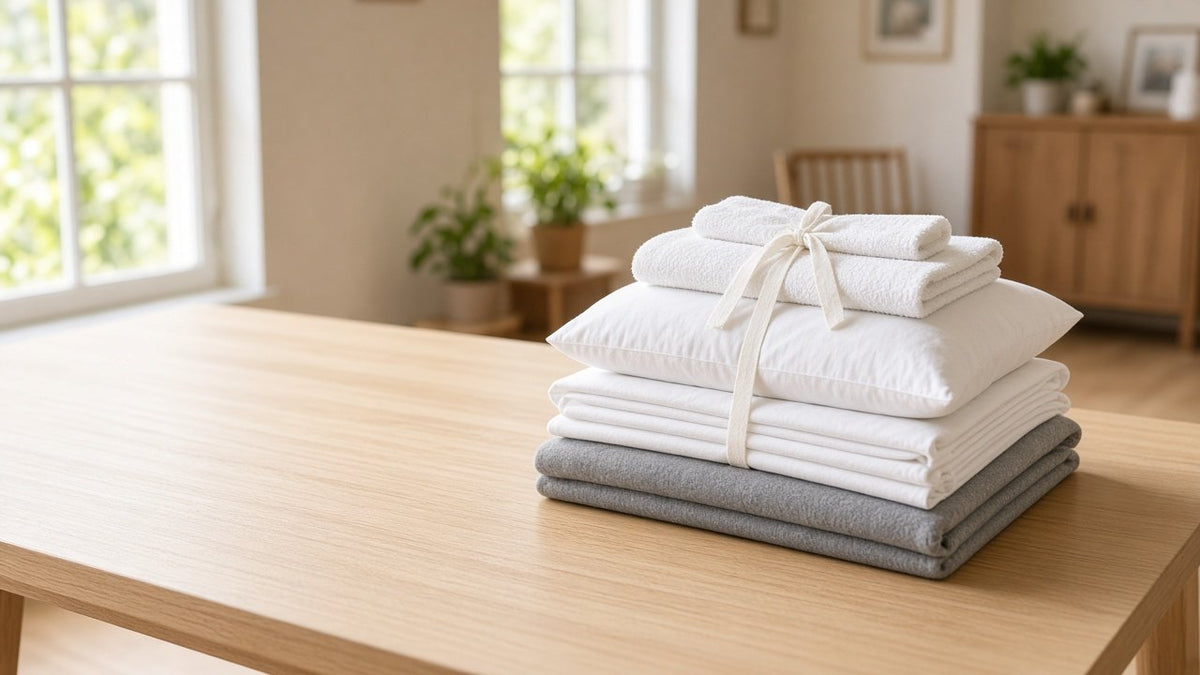
Short answer: Senior-living bedding has to do two jobs at once. It must protect the mattress and the laundry schedule, and it must still feel like a real bed, and a real home, for the resident. A practical buy covers seven categories:
- Sheets that stand up to frequent, hot laundering;
- Blankets for warmth, from thermal and snag-free to flannel bath and fleece;
- Bedspreads and coverlets that make a room feel like home (comforters are available by the case);
- Underpads and waterproof protectors for incontinence management;
- Draw sheets that help staff reposition safely;
- Wipeable or easily cleaned pillows;
- Enough spare sets that a laundry delay never leaves a bed unfinished.
Below is what to buy, what to ask a supplier, and how to keep dignity and comfort in the same order as durability.
Why senior-living bedding is different from hotel linen
Hotel sheets are built for guest turnover and brand standards. Nursing homes and assisted living communities turn beds for a different reason: care. Linens may be changed daily, after every episode of incontinence, or after clinical procedures. They go through commercial washers, often with hotter cycles and stronger chemistry than a hotel laundry uses.
That means the “nicest” sheet on a hospitality catalog is not always the right sheet for a long-term care bed. You need fabrics that:
- Dry in a reasonable time so laundry keeps moving;
- Hold shape after many washes;
- Look clean and calm in a resident’s room;
- Work with your mattress protectors and underpads, not against them.
Dignity matters as much as durability. A bed that looks institutional can undercut the home-like feel families expect. The goal is commercial performance with a residential appearance: soft hand feel, tidy corners, and colors or whites that photograph well for families and surveyors alike.
The seven-category senior-living bedding list
| # | Category | What it solves |
|---|---|---|
| 1 | Sheets (fitted and flat) | Daily comfort and laundry volume |
| 2 | Blankets | Warmth in rooms, common areas, bathing and therapy |
| 3 | Bedspreads and coverlets | A finished, home-like room |
| 4 | Underpads / waterproof pads | Incontinence management and mattress life |
| 5 | Draw sheets | Safer repositioning and fewer full sheet changes |
| 6 | Pillows (wipeable or protected) | Hygiene and resident comfort |
| 7 | Spare sets and protectors | Continuity when laundry backs up |
Towels and washcloths belong on the same purchasing calendar, even when you order them separately. Plan them with the bed, so nursing and housekeeping aren’t chasing three vendors for one room.
1. Sheets that survive the laundry

Senior-living sheets take more abuse than most hospitality sheets. Measure mattresses before you order: long-term care beds, bariatric frames and low-air-loss surfaces do not all share one pocket depth. Send us length, width and depth and we will match the sheet—without guessing from a room type label.
For fiber, poly/cotton blends are the usual workhorse in healthcare laundry. They wrinkle less, shrink less and dry faster than most 100% cotton. Cotton can feel softer to residents who notice the hand feel, but it needs more dryer time and may need pressing. Thread count matters less here than fiber, weave and how the sheet behaves after a hundred washes.
Factory Pro-Tip: Buy by the mattress, not by the wing name. Two “standard” rooms on the same floor can hide different mattress depths after a capital refresh. One wrong pocket size creates daily work for nursing and housekeeping.
Link your sheet buy to related healthcare inventory: healthcare sheets and the broader wholesale hospital bedding shelf.
2. Blankets: the warmth residents feel first
Sheets do the hard work, but the top of the bed is what a resident sees and feels first. A soft blanket can turn a care room into a bedroom. That matters for comfort, for dignity and for the families who visit.
Blankets are the main warmth layer, and most communities keep more than one type on hand:
| Blanket type | Where it’s used |
|---|---|
| Thermal (leno weave) | Resident rooms, year-round layering |
| Snag-free | Resident rooms and memory care, where loose loops can catch |
| Flannel bath blanket | Bathing, showers and therapy sessions |
| Fleece | Common areas, lounges and an extra layer on cool nights |
- Keep a lightweight layer and a warmer layer, so residents can choose.
- Stock bath blankets separately, so they’re always ready for bathing and therapy.
- Ask about flame-retardant options.
Browse our blankets.
3. Bedspreads and coverlets: making the room feel like home
A bedspread finishes the room. Quilted bedspreads and coverlets come in throw or fitted styles, and they’re made to hold up to commercial laundering. A made bed with a familiar-looking spread tells residents and families that this is home, not just a room.
- Throw styles drape over the bed for a soft, residential look.
- Fitted styles stay neat and are quicker for staff to make up.
- Comforters are available by the case for communities that prefer them.
Count bedspreads the same way you count sheets: one for every bed, plus spares for laundry days.
4. Incontinence management: underpads and waterproof protectors
Underpads and waterproof mattress protectors are the quiet backbone of senior-living laundry. They keep moisture off the mattress, cut deep-clean costs and let staff change the surface layer without stripping the whole bed every time.

When you evaluate pads and protectors, ask about:
- Reusable vs. disposable. Reusable pads cost more up front and need laundry capacity. Disposable pads suit surge use, isolation protocols or buildings without enough dryer time.
- Absorption and stay-in-place design. A pad that bunches under a resident creates pressure points and extra linen changes.
- Compatibility with your sheets. The pad should sit cleanly under or over the fitted sheet per your protocol, without fighting the corners.
- Replacement schedule. Protectors fail quietly. Put them on a calendar the same way you schedule pillow replacement.
Browse healthcare pads and protectors. Keep product claims conservative: describe what the product is for (moisture management, mattress protection), not clinical outcomes.
5. Draw sheets for safer moves
Draw sheets are often overlooked in the first purchase order and urgently needed on the floor. They give staff a grip layer for repositioning and can reduce how often a full sheet set must come off the bed.
What to clarify with your supplier:
- Whether you want a dedicated draw sheet or a multi-use flat that nursing already stocks;
- How the item launders with your sheets (same cycle, same chemistry);
- Whether color coding helps separate draw sheets from guest-facing flats.
A small stock of draw sheets per wing is cheaper than the labor of repeated full bed changes and the wear that comes with them.
6. Wipeable pillows and pillow hygiene
Pillows are the item residents notice and the item inventories forget. In senior living, hygiene rules the decision as much as loft.
Common approaches:
- Wipeable pillows with a cleanable surface for rooms where fluid exposure is frequent.
- Standard sleeping pillows with a waterproof protector and a washable pillowcase, replaced on a schedule.
- Spare pillows on the shelf so a stained or flat pillow never waits for the next delivery.
See hospital pillows. Pair every pillow with a case and a protector so the pillow itself is not the first line of defense.
7. Spare sets: the laundry buffer
Plan by the bed, not the building. A working starting point for sheets is three sets per bed: one on the bed, one in the laundry, one on the shelf. Then adjust for:
- How fast your laundry turns items around;
- Incontinence frequency on each unit;
- Loss and reject rates (stains, tears, items that leave with discharge).
Blankets, bedspreads, underpads, protectors and pillows need spares too, just at different ratios. Our par level calculator helps you translate bed count into order quantities.
Dignity and comfort: specifying the “home-like” bed
Administrators and buyers hear the same two complaints: beds that look clinical, and linens that feel rough after a few washes. You can fix both without giving up commercial laundry rules, and the top of the bed is where to start. A warm blanket and a quilted spread do more for a “home-like” room than almost anything else you buy.
- Prefer whites or calm neutrals that look clean in daylight and under LED lighting.
- Ask for a hand-feel sample before you commit a whole building.
- Finish every bed with a bedspread or coverlet, and keep pillow presentation consistent wing to wing so rooms look finished.
- Offer residents a choice of blanket weight. Being comfortable is part of dignity.
- Avoid mixing random retail leftovers with the program stock—mixed brands create mixed results and harder training for housekeeping.
Comfort is not a separate line item from durability. A sheet that fails in the dryer fails the resident the same week.
What to ask any senior-living linen supplier
- Will these items survive our wash formula? Ask for recommended temperatures and chemistry notes in writing.
- Can you match our mattress sizes, including depth? Guessing from “twin” or “full” labels is how wrong pockets arrive.
- What is the real lead time for this quantity? Our small orders typically ship 3–5 days after receipt of order (ARO); medium orders 7–14 days ARO. Larger custom programs take longer, and we put a dated commitment in the quote.
- How do sheets, blankets, bedspreads, pads and pillows work together as a system? Buying each category from a different catalog is how gaps appear on the floor.
- Which blankets and bedspreads hold up to our laundry? Ask which blanket types and spread styles suit each area, and ask about flame-retardant options.
- Can we start with a sample set? Samples are available on request; sample fees and shipping may apply.
Minimum order quantity varies by product. Quotes typically take 24–48 hours once we have bed counts and sizes.
How The Linen Factory supports senior living
We’re Paradise Pillow, Inc., doing business as The Linen Factory, a bedding manufacturer in Philadelphia since 1990. Senior-living and healthcare buyers most often order sheets, blankets, bedspreads, pads and protectors, pillows and supporting linens:
- Healthcare sheets
- Blankets
- Healthcare pads and protectors
- Hospital pillows
- Wholesale hospital bedding
We accept purchase orders and can support facilities that use government purchase cards when those cards apply to the account. For government-funded programs that buy through GSA, see our Government, Military & GSA page (MAS 47QSMS26D002G, SIN 314120).
Frequently asked questions
How many sheet sets does a nursing home bed need? Start with three sets per bed and adjust for laundry turnaround and incontinence volume. Some units need more shelf stock than others.
What kinds of blankets do nursing homes use? Most communities keep several types: thermal (leno weave) and snag-free blankets in resident rooms, flannel bath blankets for bathing and therapy, and fleece for common areas. Ask about flame-retardant options.
Do bedspreads hold up to commercial laundering? Yes. Our quilted bedspreads and coverlets come in throw or fitted styles and are made to hold up to commercial laundering. Comforters are also available by the case.
Should we use reusable or disposable underpads? It depends on laundry capacity, protocol and surge needs. Many communities use reusable pads for routine care and keep disposable pads for isolation or overflow.
Do wipeable pillows replace pillowcases? No. Wipeable pillows still need a case for comfort and appearance. The wipeable surface protects the pillow between case changes.
Can you match odd mattress sizes? Yes. Send length, width and depth. We match the sheet to the mattress rather than to a room-type label.
How fast can you ship? Small orders typically ship 3–5 days ARO and medium orders 7–14 days ARO. Large or custom orders take longer; we confirm dates in the quote.
Request a senior-living quote
Tell us your bed count by mattress size, the blankets and bedspreads or coverlets you want, whether you need underpads and draw sheets, pillow preferences and delivery location. We’ll reply with options and lead time.
Request a senior-living quote · Call (215) 225-8700 (press 1 for sales)
This article is general buying guidance for senior-living linen programs. It is not clinical, infection-control or regulatory advice. Follow your facility protocols and applicable standards.
Share:
T130 to T400: Choosing a Sheet Tier for Your Hotel
What Bedding Do Air Force Dorms Need?